Showing posts with label shorebird. Show all posts

14 October 2025

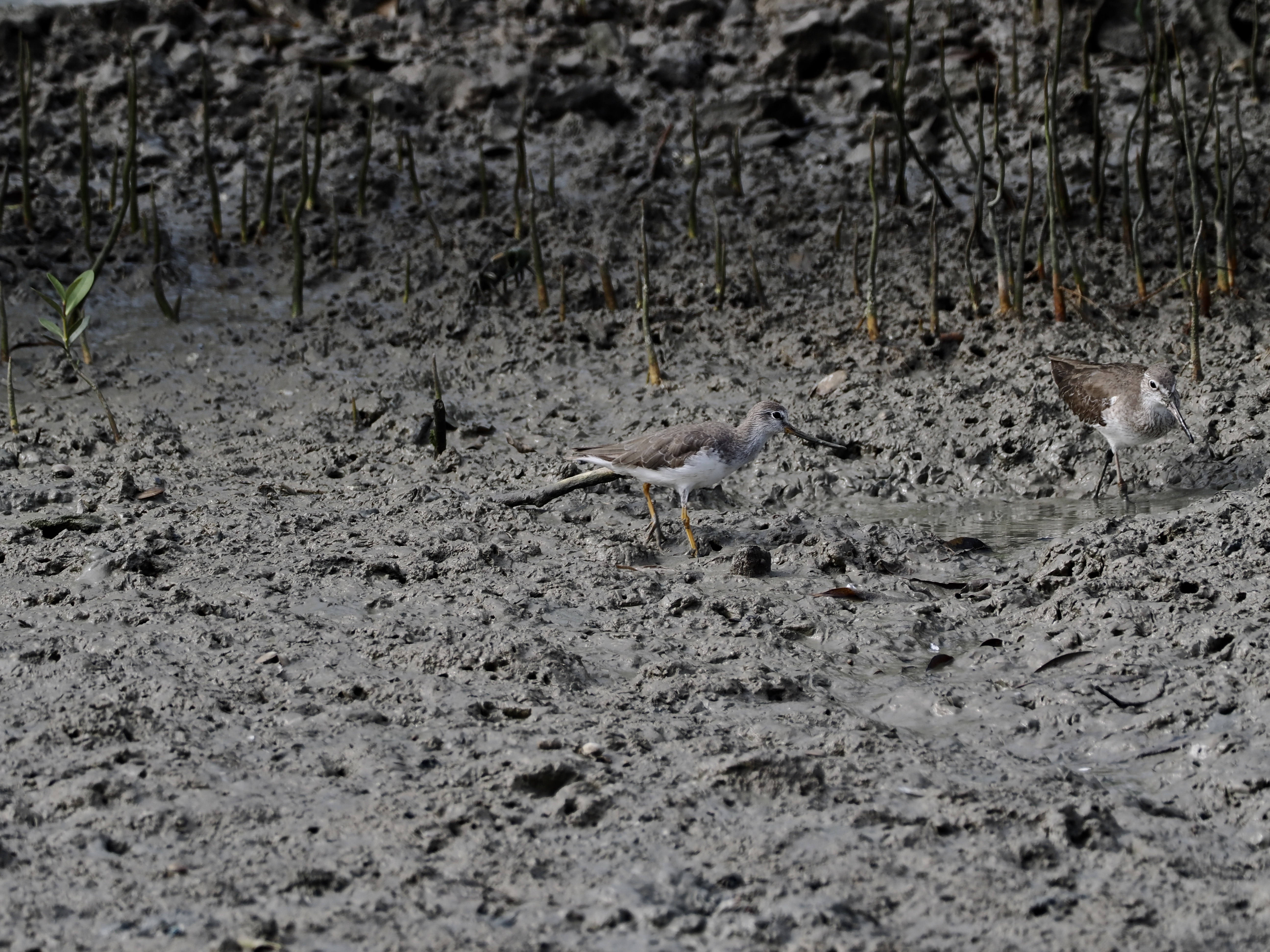
Common Greenshank

 Charadriiformes - Scolopacidae - Tringa nebularia (Kedidi Kaki Hijau Biasa)

Gentle-eyed large wader with a slightly upturned bill. Note overall grayish plumage with white belly and greenish legs. In flight, appears dark above with a broad white stripe up the middle of the back. Slightly larger and lankier than Common Redshank. Usually seen as singles or small groups. Listen for mellow “tewtewtew.” Feeds mainly by striding in water, picking and sweeping with its bill. Breeds across northern Europe and Asia; migrants and wintering birds in Africa, southern Asia and Australia occur in varied wetland habitats.
(eBird)


And what's green to the eyes but serenity.


24Feb2026


13 October 2025

Common Redshank

Charadriiformes - Scolopacidae - Tringa totanus (Kedidi Kaki Merah Biasa) 

Stocky brown wader with bright red legs; compare with slenderer, far more gracile Spotted Redshank in juvenile and non-breeding plumage. Often rather wary, alerting other birds with its loud, fluty, whistled calls. Bobs tail when nervous, and then flies to show flashy white trailing edge to wings, white rump patch. Feeds in muddy shallows, probing and picking with its bill. Inhabits fresh and coastal wetlands; also breeds on moorland, usually near water.
(eBird)


When seeing red is not danger but delight.


08 October 2025

Terns

 Charadriiformes - Laridae - Chlidonias hybrida (Camar Bermisai)


Small buoyant tern. Breeding adult has distinctive dark smoky gray body and contrasting white cheeks (can look like broad white "whiskers" in flight) underneath a black cap. Nonbreeding plumage pale silvery gray overall with a faded shadow of the cap; juvenile has dark-checkered back. Note rather stout bill (albeit thinner than Gull-billed Tern) and square tail; compare to Common, Roseate, and Arctic Terns. Feeds by picking from surface, not splash-diving like typical terns. Common around wetlands, lakes, and rivers.
(eBird)


Whiskered tern (l) Gull-billed tern (r)


Charadriiformes - Laridae - Gelochelidon nilotica (Camar Tiram) 

Medium-sized tern with thick black bill. Very pale overall with black cap in breeding plumage. Legs black. Nonbreeding plumage shows dark cheek patch. Found in marshier habitats than most other terns, in the Americas usually near the coast but not on the ocean (though also occasionally seen on beaches and mudflats); in Europe and Asia can also be found in wetlands well away from the coast. Rarely seen in flocks with other terns; often single or in pairs. Feeds on invertebrates and crabs in mud and marshes; often patrols the edges of ponds but does not grab fish from the water like other terns.
(eBird)


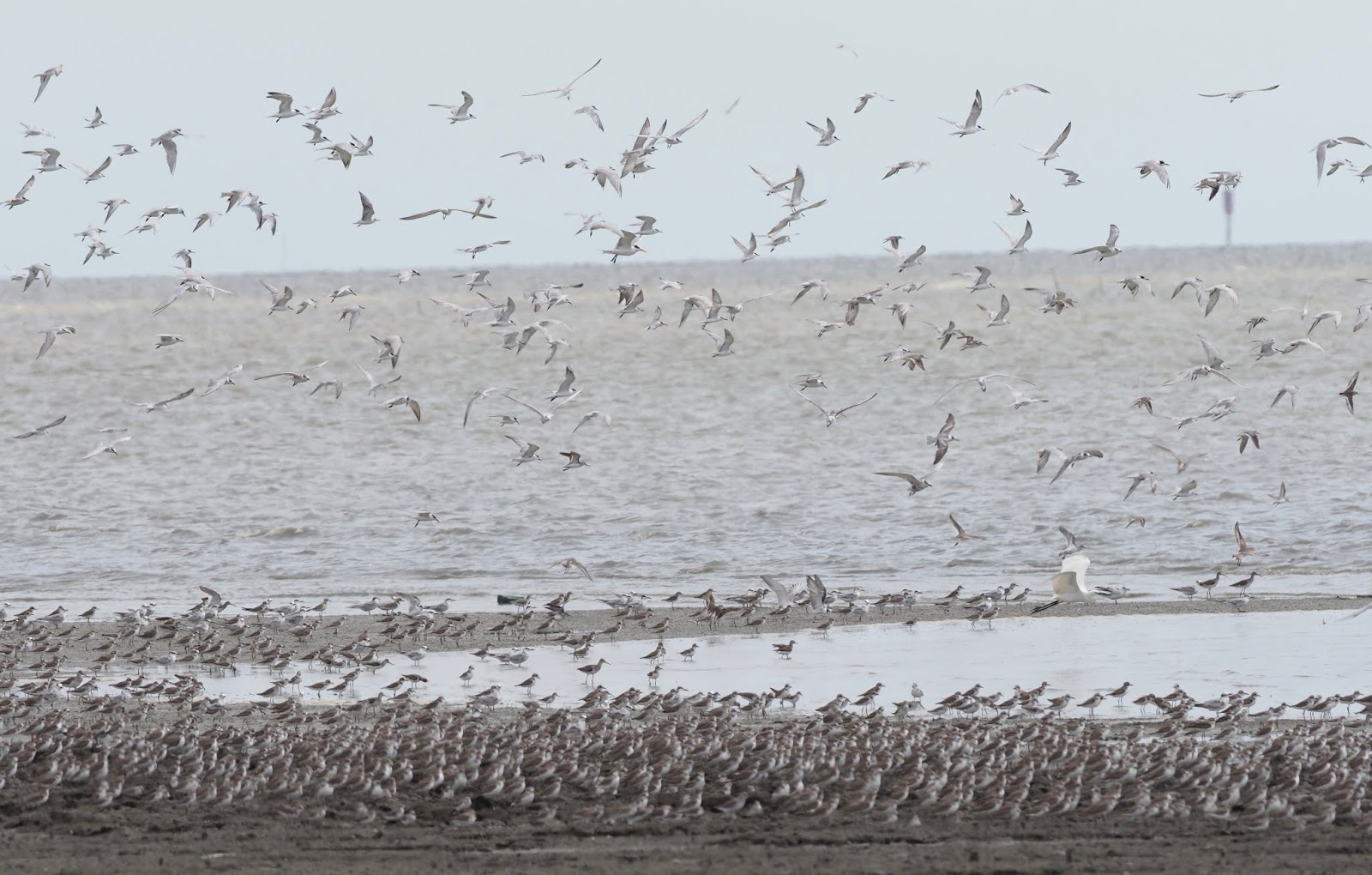
Gull-billed terns

Gull-billed terns and Whiskered terns


I see to connect, and disconnect, to remain focused.


04 April 2023

31 December 2019

A little different

common sandpiper


terek sandpiper

whimbrel
A little different
A little diverse
More or less
We are.


curlew sandpiper

greater sand plover, lesser sand plover, curlew sandpiper (downturned bill), terek sandpiper (upturned bill), a stint

I am
so I am.

black-headed gull