Showing posts with label Iora. Show all posts

05 September 2025

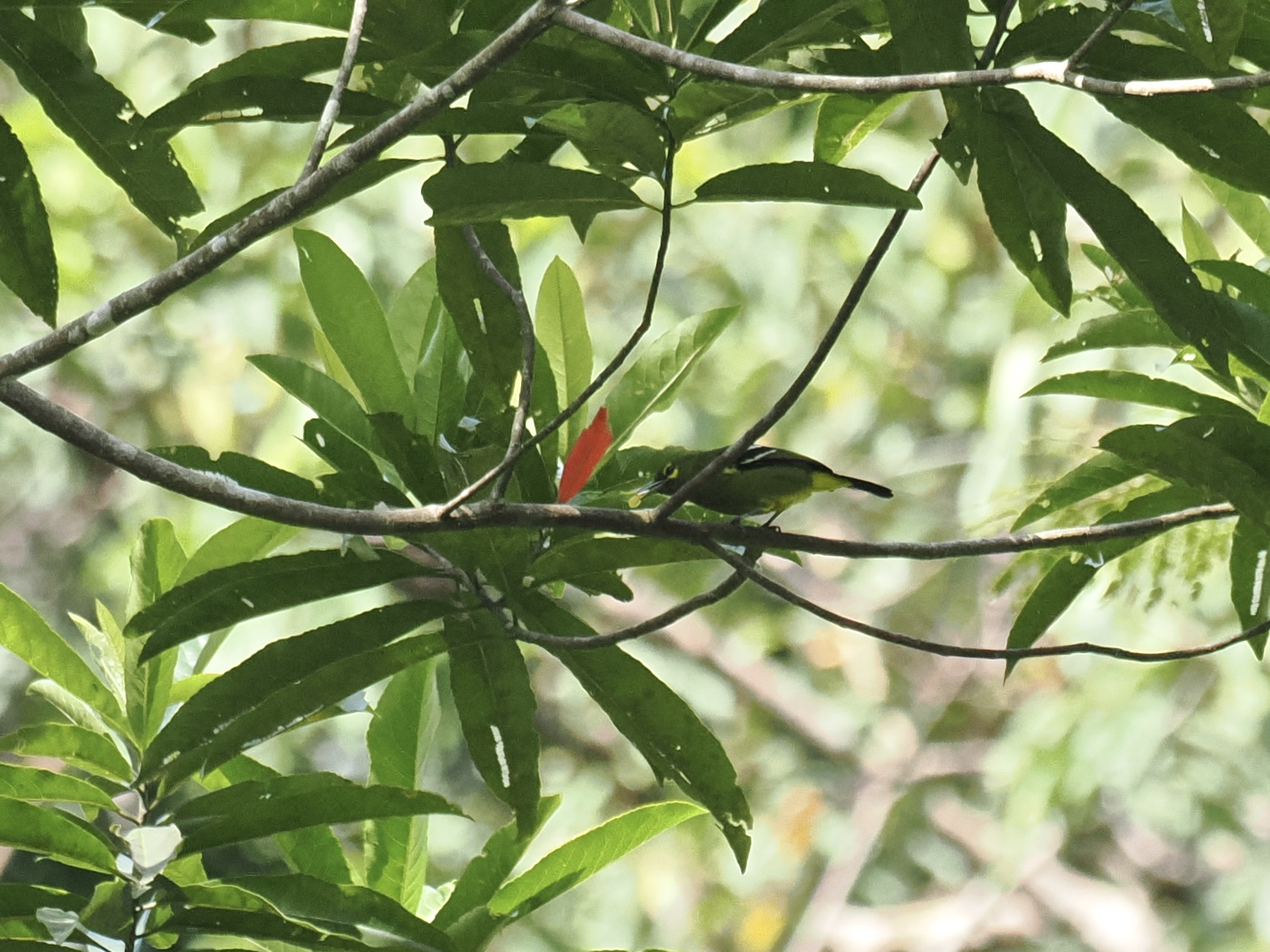
Green Iora

 Passeriformes - Aegithinidae -  Aegithina viridissima (Kunyit-Kecil Hijau)


A medium-sized canopy-dweller of lowland and foothill forests, often seen with mixed flocks. Male is dark olive-green with boldly black-and-white-striped wings; female is paler, with an olive back and a less contrasting wing pattern. Look for bright yellow “goggles” around dark eyes in both sexes; Common Iora lacks these goggles and has pale eyes, but these can be hard to discern. Song is high, simple, and repetitive: “wit-dee, wit-dee, wit-dee” or “chew-a-wee-chew, chew-a-wee.” Calls vary, but the most common ones are downslurred and rather nasal-sounding.
(eBird)


"To see takes time."


03 September 2025

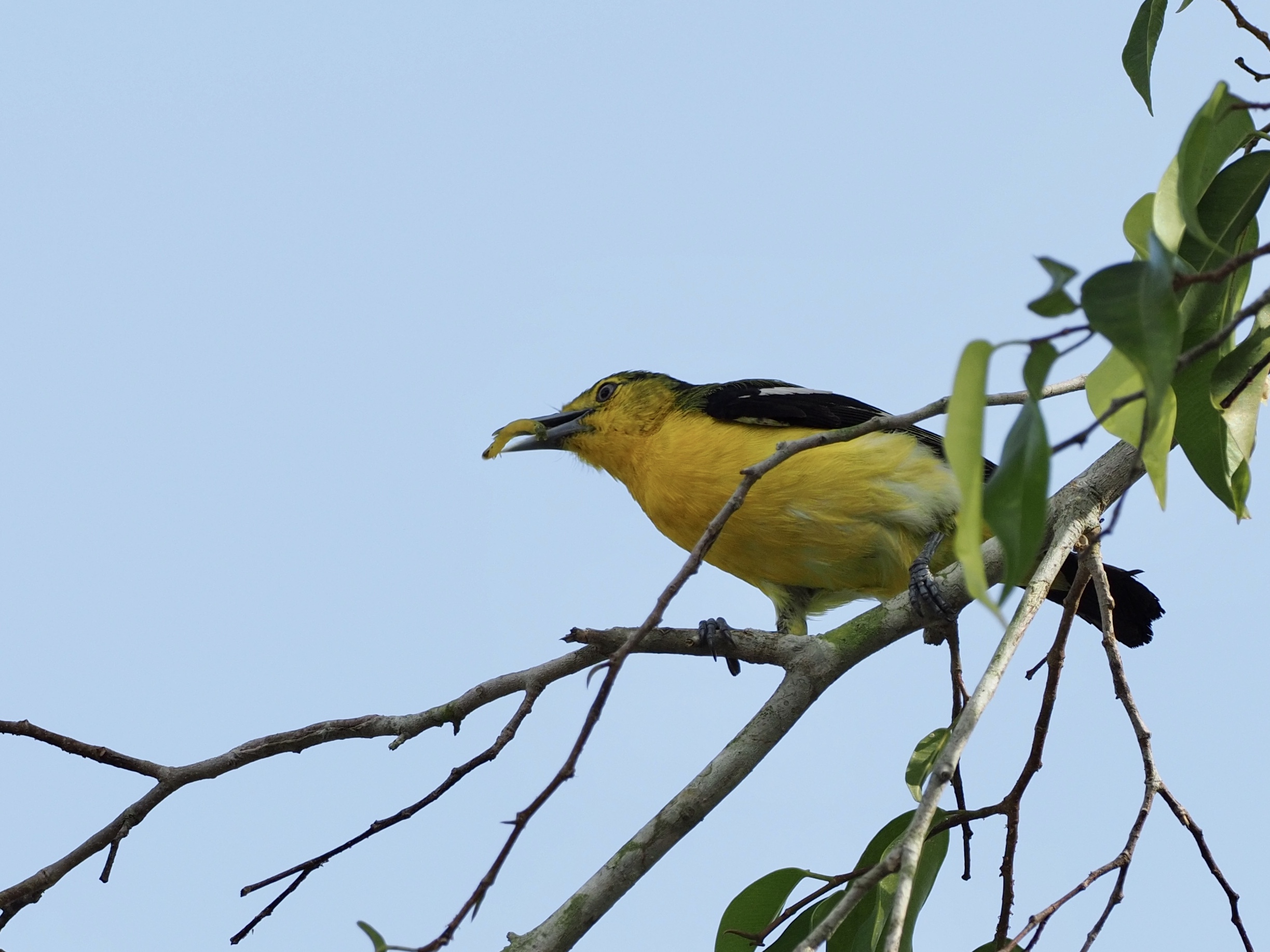
Common Iora

 Passeriformes - Aegithinidae - Aegithina tiphia (Kunyit-kecil Biasa)


Breeding adult males are black above and rich yellow below with white wingbars. In nonbreeding plumage the upperparts are greenish-yellow, but the wings are still black with white wingbars. The female is similar in appearance to a nonbreeding male. These birds are quite vocal and can produce a wide variety of calls. The most commonly heard is the whistle “twiii tuiii twiiii.” Apart from this, it utters variable “chirrs” and chattering. The song is a trilled “wheeeee-tee.” Common Iora are frequently seen in wooded areas, scrub, and cultivated lands.
(eBird)


What do I see yet do not see?


29 July 2025

Green Iora

Passeriformes - Aegithinidae -  Aegithina viridissima (Kunyit-Kecil Hijau)


A medium-sized canopy-dweller of lowland and foothill forests, often seen with mixed flocks. Male is dark olive-green with boldly black-and-white-striped wings; female is paler, with an olive back and a less contrasting wing pattern. Look for bright yellow “goggles” around dark eyes in both sexes; Common Iora lacks these goggles and has pale eyes, but these can be hard to discern. Song is high, simple, and repetitive: “wit-dee, wit-dee, wit-dee” or “chew-a-wee-chew, chew-a-wee.” Calls vary, but the most common ones are downslurred and rather nasal-sounding.
(eBird)


On seeing and being seen, who's the catcher, who's the captive?


11 April 2025

Common Iora

Passeriformes - Aegithinidae - Aegithina tiphia (Kunyit-kecil Biasa)


Breeding adult males are black above and rich yellow below with white wingbars. In nonbreeding plumage the upperparts are greenish-yellow, but the wings are still black with white wingbars. The female is similar in appearance to a nonbreeding male. These birds are quite vocal and can produce a wide variety of calls. The most commonly heard is the whistle “twiii tuiii twiiii.” Apart from this, it utters variable “chirrs” and chattering. The song is a trilled “wheeeee-tee.” Common Iora are frequently seen in wooded areas, scrub, and cultivated lands.
(eBird)


* Knowledge's disease - sickness occurs when one thinks one knows when one doesn't know
- beware the afflictions of self-importance or ego -


08 September 2024

Beyond

Tending to


What holds, what imprisons - what's strangling.


What refuses to let go


24 November 2022

Assessment


To choose but not to judge


Clouds appear free of care
and carefree drift away.
But the carefree mind is not to be "found" -
to find it, first stop looking around.


Wang An-shih
(1021-1086)


july 2024


19 July 2022

the same road after all


a long road
i take, and i give


how much is much


it's the same road
we walk separately


we get what we seek
the same need not be the same