12 January 2025

Oriental Magpie-Robin

Passeriformes - Muscicapidae - Copsychus saularis (Murai Kampong)

A medium-sized robin with a broad white wingbar running from the shoulder to the tip of the wing. Note white outertail feathers, particularly when in flight. Males sport black-and-white plumage while the females are grayish brown and white. Juveniles resemble females, but have a scaly head and upperparts. They have a good repertoire of melodious calls and are known to imitate other bird calls. The most commonly heard call is a whistle given at dawn. Most often seen singing from a high exposed perch. These birds are often seen in cultivated areas, open woodlands, and gardens.
(eBird)


A sub-adult, still unwary, foraging close up.


* Quelling war - victory never is if there is suffering
- do not beget at another's expense -


09 January 2025

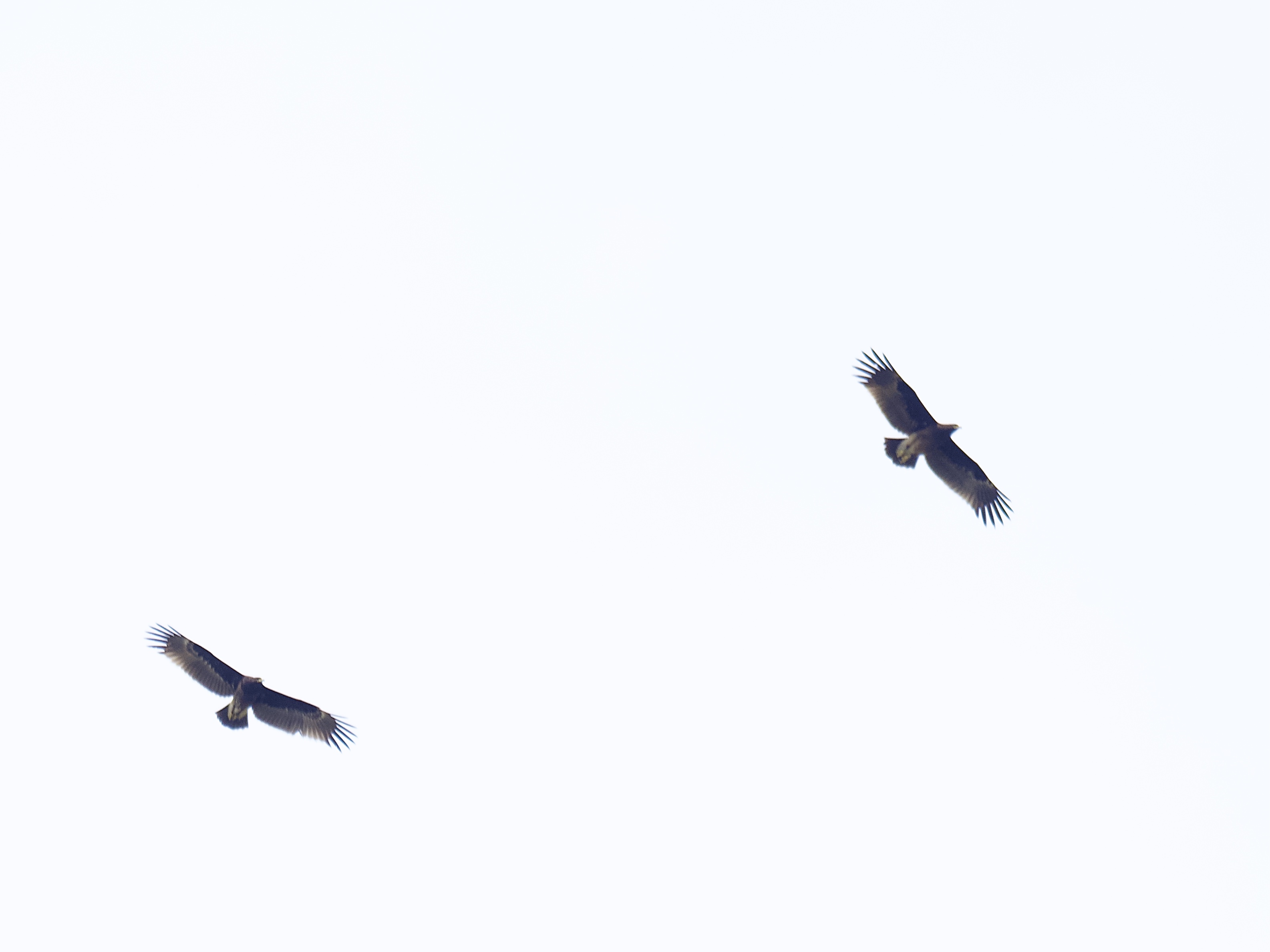
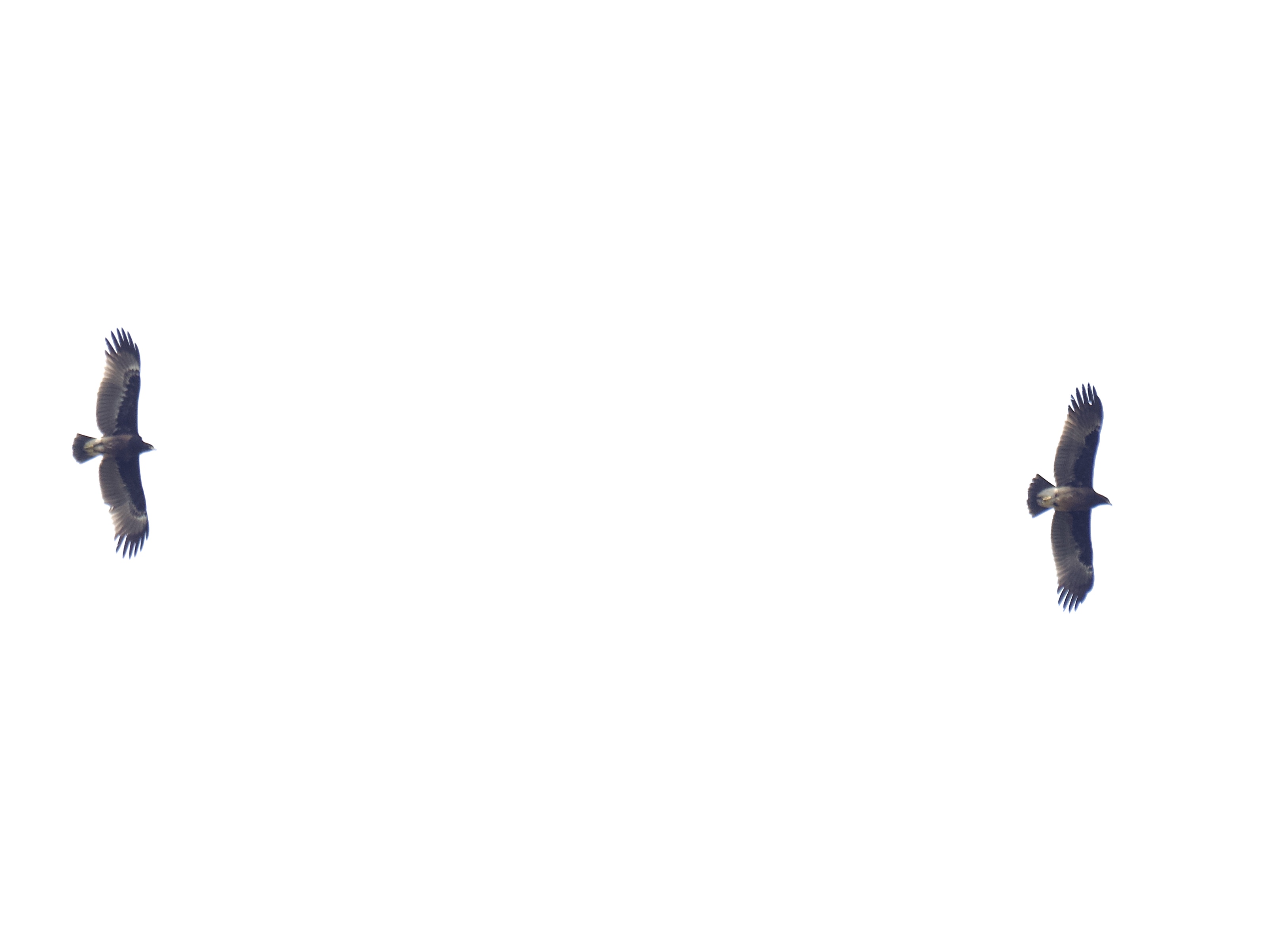
Greater Spotted Eagle

Accipitriformes - Accipitridae - Clanga clanga (Helang-bintik Besar)

Adults are large and quite uniform dark brown eagles with very broad wings and short tails. Single white "comma" mark at the wrist of the underwing. Similar to the Lesser Spotted Eagle, which is smaller, paler, and more contrasting. Juveniles are more boldly patterned with numerous prominent dirty white spots on the back and upper wings. More tied to forests than Lesser Spotted Eagle, but still near rivers and bogs. Frequents humanmade habitats more often in winter, such as lakes, rubbish dumps, and reservoirs.
(eBird)


 Not alone, for scavengers around


* Be stingy with wars - what's against the Tao always comes to end *
- have differences not disputes - 


08 January 2025

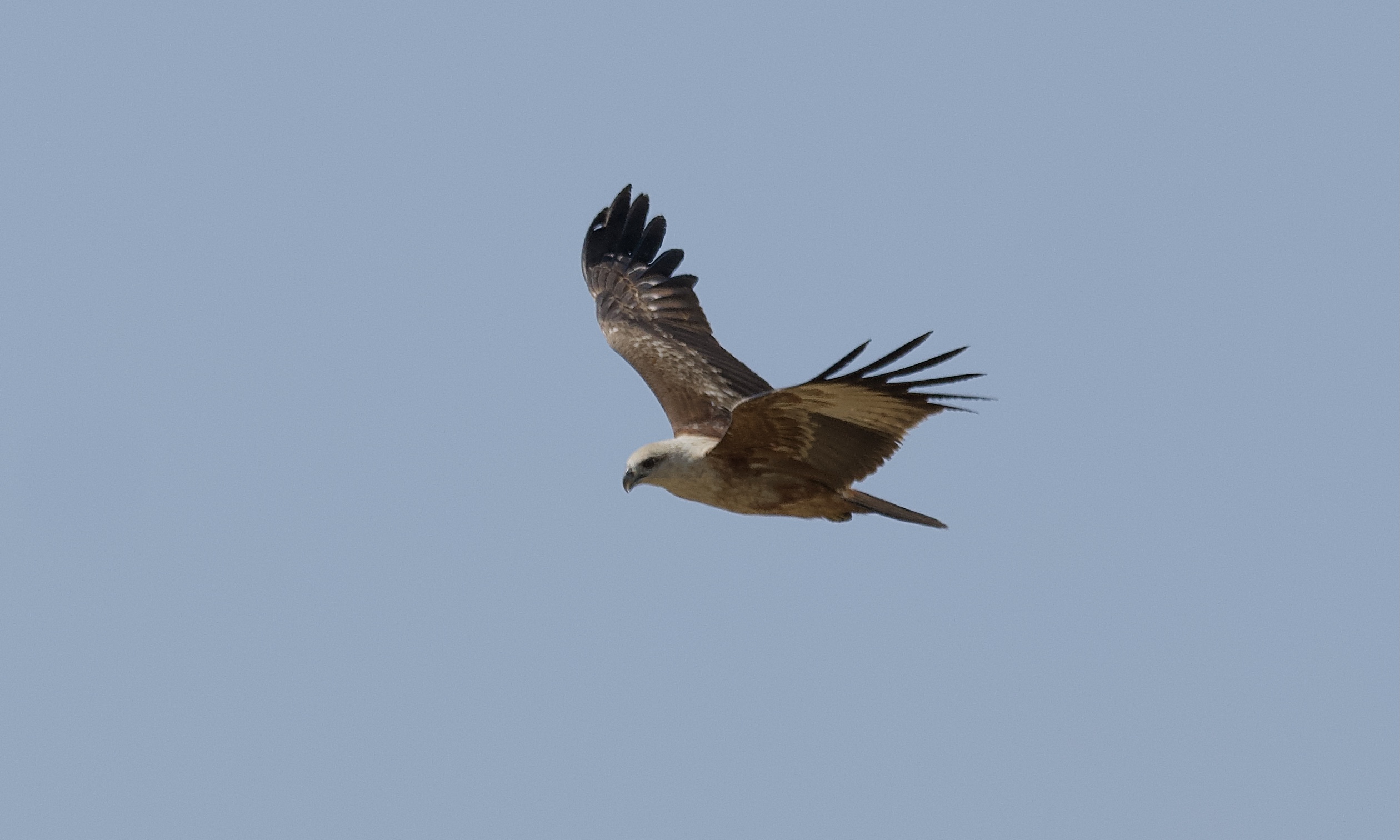
Brahminy Kite

 Accipitriformes - Accipitridae - Haliastur indus (Helang Merah)

A medium-sized raptor with a rounded tail unlike other kites. Adults are unmistakable with a white head and breast contrasting with otherwise brick brown plumage. Juveniles are a darker brownish-black with a paler head and prominent white patches under the wings. Usually associated with both inland and coastal wetlands in tropical Asia, but it is largely restricted to coastal wetlands in Australia where it is alternately known as “Red-backed Sea Eagle.” Call is a distinctive nasal, drawn out, “Kyeeerrh.”
(eBird)


Just flying, no display


The younger one


* Not-doing - avoid extreme, excess
- do not exhibit, do not impress


06 January 2025

Large-billed Crow

Passeriformes - Corvidae - Corvus macrorhynchos (Gagak Paruh Besar)

A large crow that varies in size across its range; note its relatively long, daggerlike bill with curved top. Entirely black with a variable amount of glossiness. A frequent scavenger, feeding on carrion, leftover food from humans, and food stolen from other birds. Often gangs up to attack and chase other birds, especially raptors. Occurs in a wide range of habitats including woodlands, urban landscapes, agricultural fields, and open scrub forests. Call varies, generally a harsh or croaking crow.
(eBird)


When black is beautiful.


* Returning to simplicity - the function, virtue, power of simplicity
- celebrate simple needs - 


02 January 2025

Asian Brown Flycatcher

Passeriformes - Muscicapidae - Muscicapa dauurica (Sambar Coklat Asia)

Plain brown flycatcher with a large-eyed appearance. Note bright white eyering and unmarked throat and underparts. Appears shorter- and plainer-winged than other similar brownish flycatchers. Favors broadleaf forests; also found in more open habitats on migration and wintering grounds. Sallies from exposed perches; cocks tail and flicks wings when perched. Song comprises high buzzy trilling and whistles. Calls include dry rattling and chittering.
(eBird)


* Skill's function - what's true skill
- continuous learning - 


30 December 2024

Eastern Cattle-Egret

Pelecaniformes - Ardeidae - Ardea ibis/coromanda (Bangau Kerbau)

Small, compact white heron with relatively short yellow bill. More frequently seen in dry habitats than other egrets. In breeding season, look for pale salmon color on head and breast and brighter bill. Leg color varies from reddish or yellow during the breeding season to black during the nonbreeding season. Juveniles have dark bill. Always note relatively short, thick neck and short legs compared with other egrets. Often gathers in flocks, frequently following cattle or tractors in fields.
(eBird)


Free for all yet mutually beneficial.


* Dignity's virtue - Mindfulness's virtue
- deliberate positive participation -  


26 December 2024

Steppe Eagle vs Greater Spotted Eagle

Accipitriformes - Accipitridae - Aquila nipalensis (Helang Gurun)

A large eagle with rich brown plumage, wide wings, and seven well-splayed “fingers” at the wingtip. Adults are entirely dark brown; juveniles and immatures at rest show a distinctive wide white band bordered with black on the wing. In flight, this transforms into a white traverse band on the underwing that forms the base of the primary and secondary feathers. Birds take about four years to attain adult plumage. Frequents open grasslands, deserts, scrub, wetlands, and mountains, and is a regular carcass feeder along with vultures.

 Accipitriformes - Accipitridae - Clanga clanga (Helang-bintik Besar)

Adults are large and quite uniform dark brown eagles with very broad wings and short tails. Single white "comma" mark at the wrist of the underwing. Similar to the Lesser Spotted Eagle, which is smaller, paler, and more contrasting. Juveniles are more boldly patterned with numerous prominent dirty white spots on the back and upper wings. More tied to forests than Lesser Spotted Eagle, but still near rivers and bogs. Frequents humanmade habitats more often in winter, such as lakes, rubbish dumps, and reservoirs.

(eBird)


What it knows, and what we think we know


* Imaging the mysterious 
- Man follows Earth
  Earth follows Heaven
  Heaven follows Tao
  Tao follows Nature

- abide by the natural -